


Configuring Tomorrow’s Workplace: The New Intelligence Behind Choice


The modern workplace is no longer a set of static objects, it is a living system. As organisations rethink how environments shape cognition, collaboration, and long-term culture, the quiet decisions behind selecting office furniture have become strategic rather than cosmetic.
Logical Office Furniture views this shift from close range, both in our brick and mortar showroom and across our digital storefront. The transformation is unmistakable. Leaders are no longer asking what a chair or desk looks like, they are asking what it enables.
The New Architecture of Work
The energy of workplace design is shifting toward environments that behave almost like user interfaces. Surfaces, seating, spatial divisions, and storage units guide micro-decisions throughout the day. The demand for adaptable office furniture rises because organisations now recognise that culture is partially constructed through physical cues rather than memos or meetings.
In Austin and across emerging innovation hubs, we see teams choosing workstations that react to movement, chairs that support extended focus, and conference solutions that signal psychological safety. These are not ornamental choices. They are structural levers that influence mood, clarity, and creative output.
Logical Office Furniture studies these patterns to anticipate what the next decade of workplace evolution will require.
Why Materials and Design Influence Behaviour
In the past, furniture was chosen for durability alone. Today, leaders look for materials that tell a story about intention. Textures influence how teams feel. Angles determine openness. Height affects authority. A desk positioned at the wrong scale can undermine the collaborative rhythm of an entire department.
This is why our curation goes beyond aesthetics. We watch how people move, how they cluster, how they transition between deep focus and collective dialogue. When a chair holds posture instead of constraining it, productivity increases. When a worksurface absorbs clutter rather than amplifying it, mental load decreases.
Design, in other words, is a behavioural technology.
How a Futuristic Office Furniture Dealer Shapes Spatial Strategy
A modern office furniture dealer is no longer a vendor, it is a strategic interpreter. Logical Office Furniture treats every workspace ecosystem as a long-term system, one where ergonomics, culture, and organisational velocity intersect.
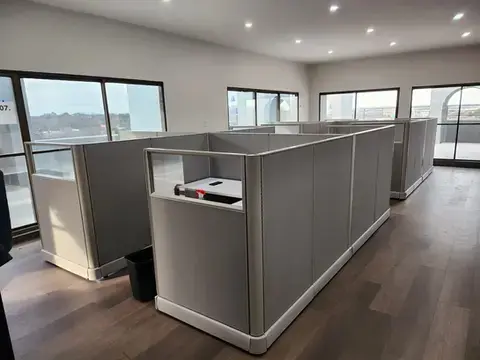
We often ask leaders a simple question: what should your teams feel when they enter the room? Confidence, calm, curiosity, flow. Once that answer is clear, we construct spatial pathways that reinforce those emotions. A modular workstation can allow a growing tech team to scale without disorientation. A refined executive desk can quietly convey clarity and authority. A collaborative table can stabilise hybrid work rituals.
The goal is to create environments that behave like quiet infrastructure.
Bridging the Physical and Digital Showroom
Having a brick and mortar showroom gives customers a sensory experience, which remains irreplaceable. People understand proportion, comfort, and weight only when they encounter them physically. Yet our online platform expands access, allowing organisations to evaluate dozens of configurations without leaving their office.
This dual presence reflects how decisions are truly made. Inspiration often begins online, then becomes conviction once the product is tested in person. Logical Office Furniture was built to support that full decision cycle because thoughtful environments require more than a catalogue. They require interpretation.
The Economics of Long Horizon Furnishing
In 2026, leaders want investments that grow with their operations. They also want to avoid continuous reinvention. The smartest organisations think of office furniture as long horizon infrastructure rather than consumable goods.
Well-designed seating reduces turnover related to physical strain. Quality workstations extend the life of technology. Intelligent storage systems reduce clutter costs that accumulate invisibly. When leaders account for these cumulative advantages, furniture becomes a strategic asset that protects operational momentum.
In our experience, organisations that treat workspace as infrastructure consistently outperform those that treat it as décor.
What Leaders Should Prioritise in 2026
The most impactful workplaces share three qualities.First, they are adaptable. Teams evolve, markets shift, and environments should support that movement.Second, they are psychologically coherent. The furniture signals what behaviour is valued and what outcomes matter.Third, they are future-ready. Technology integration, employee wellness, and environmental sustainability all converge through spatial design.
Logical Office Furniture focuses on these pillars because they will define the next era of organisational performance.
Conclusion
As workplaces accelerate into a more fluid and interconnected future, the objects surrounding us gain new significance. Office furniture becomes a blueprint for behaviour, mood, and collective intelligence. What we choose shapes how we think.
In our dual physical and digital presence, we observe the same truth repeating itself. When environments are designed with intention, organisations move more freely. The office feels less like an address and more like an ecosystem that supports human clarity.
FAQs
1. Why is quality office furniture increasingly viewed as strategic infrastructure?Because well-chosen pieces influence coordination, focus, and employee well-being. The cost savings over time surpass initial investment.
2. How does a modern office furniture dealer support long-term planning?
A skilled dealer interprets workflow patterns, cultural nuances, and spatial demands to guide leaders toward future-ready solutions.
3. Does furniture still matter in hybrid or partially remote teams?
Yes, physical environments shape the quality of collaboration when teams gather. Intentional design reinforces culture even in flexible models.
4. How can organisations future-proof their workspaces?
They should choose adaptable systems, integrated technology solutions, and furniture that supports ergonomics and behavioural science.
5. Why does visiting a brick and mortar showroom still matter?
Physical testing reveals comfort, scale, and sensory alignment in ways digital browsing cannot replicate.
6. How does Logical Office Furniture support both in-person and online buyers?
We integrate design expertise with a wide product range across both platforms, allowing teams to explore options digitally and validate choices physically.


Accessible Sewa Mesin Fotocopy Terdekat solutions support clear office equipment planning. Machine details remain structured properly. Operations follow consistent planning.